Multi-location
Run many venues under one roof with organizations, location groups and policy-enforced data access — unified or strictly isolated, your call.
How it's structured
Multi-venue operators get three layers: an organization at the top, optional location groups in the middle (regions, brands, franchise cohorts), and locations — the venues themselves. Each location keeps its own booking site, kiosk, games and settings; the organization decides what's shared.
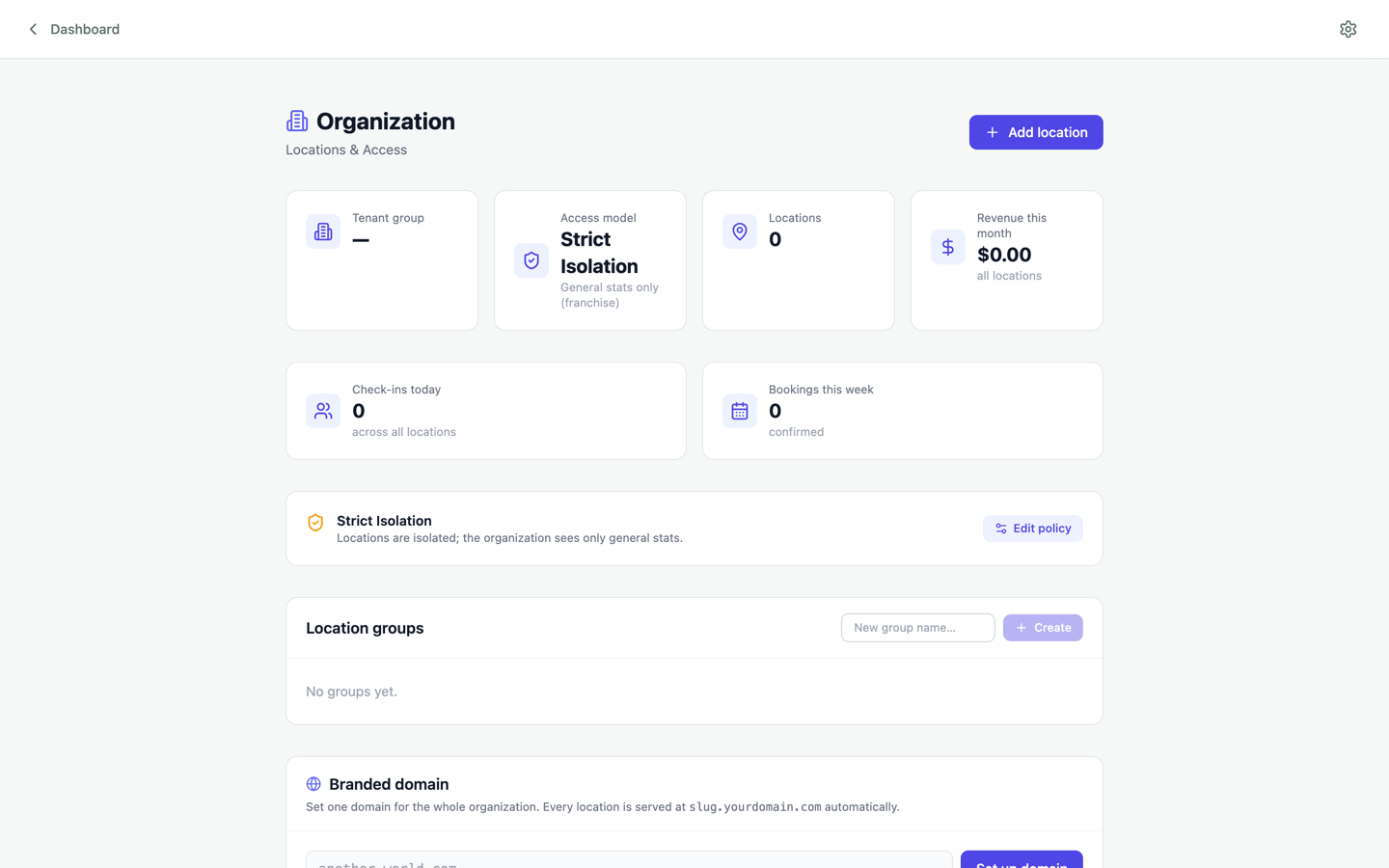
1. Create your organization
On the Growth plan, open Organization in the dashboard and create the org. Your existing venue becomes its first location; additional locations are added for a flat fee per venue (see pricing) and inherit sensible defaults you can override per location.
2. Choose your access policy
The policy is enforced by the platform, not the honor system:
- Unified access — customers, staff and reporting are shared across locations. A guest who signed a waiver at your downtown venue checks straight in at your airport one. Right for corporate-owned chains.
- Strict isolation — each location's customers and data stay walled off; only org-level roll-up reporting crosses the line. Right for franchises where each unit is a separate business.
Policies can be set per location group, so a corporate-owned group can run unified while franchise locations stay isolated — in the same org.
3. Franchise consent
When head office requests access to a franchisee's location, the location owner approves or declines the request explicitly — access is never silently granted. Franchisees keep control of their customer data while head office gets the visibility both sides agreed to.
4. Org staff & scoping
Organization staff are scoped to HQ, to a group, or to specific locations — a regional manager sees their region, head office sees everything the policy allows. Location staff stay scoped to their venue.
Org-wide reporting
Whatever the policy, Analytics rolls revenue and utilization up to the organization, with per-location and per-group breakdowns — so you can compare venues without merging their data.